

Testing waste at 800°C: eLITHE evaluates ceramic materials for high-temperature energy storage
What happens to ceramic waste when it is exposed to temperatures of 800°C for hundreds of hours? Researchers from KTH and UNIGE put it to the test, and the findings are now published in D3.2, Enhanced Upcycled High Temperature TES Materials.
Led by KTH Royal Institute of Technology with contributions from the University of Genoa (UNIGE), this deliverable reports on an extensive experimental campaign to assess how well waste ceramic materials and industrial by-products hold up under the demanding thermal conditions of high-temperature Thermal Energy Storage (TES) systems.
Putting waste materials to the test
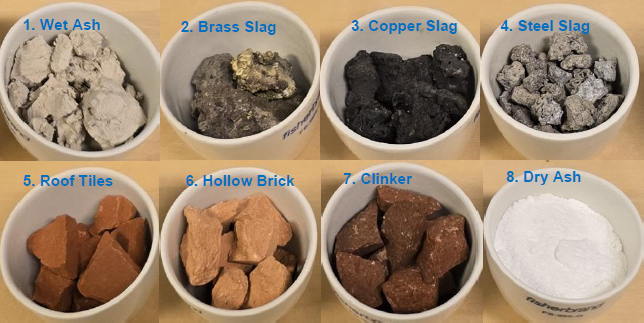
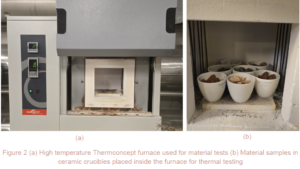
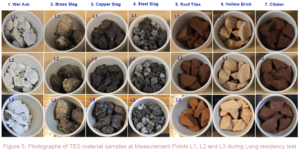
Researchers tested eight materials in total: three ceramic wastes (clinker, roof tiles, and hollow bricks) from project partner IZF, two ash samples (dry and wet), and three metallic slags (brass, copper, and steel) included as reference benchmarks. Each material was placed in a high-temperature furnace and subjected to two distinct test protocols — a long-duration stability test lasting over 300 hours at 800°C, and a thermal cycling test comprising 30 cycles between 400°C and 800°C. These conditions were designed to replicate the real-world stresses that TES materials experience in industrial operations.
Clinker takes the lead
Of all the materials tested, clinker came out on top. It demonstrated the smallest weight variations, no visible structural degradation, and remained compatible with molten salt Heat Transfer Fluids — a key requirement for versatile TES system design. Roof tiles performed closely behind, proving a reliable second option among ceramic waste candidates.
Wet ash, which arrived at the lab as a soft, paste-like material, surprised researchers by hardening into a solid structure after heat exposure — a promising sign of its potential as a future TES medium. Dry ash, on the other hand, proved incompatible with high-temperature testing due to its high boron oxide content, which caused it to melt and crack the test crucible.
From waste to storage solution
Beyond material selection, the deliverable also outlines practical enhancement strategies. For wet ash in particular, researchers recommend extruding the raw material into brick-shaped forms before sintering it at high temperature — a process that consolidates its silico-aluminous components and improves compactness and mechanical strength. The addition of alumina (Al₂O₃) is also proposed as a way to further boost thermal conductivity.
These findings feed directly into eLITHE’s broader goal: designing TES systems that can be integrated into electrified ceramic production lines, helping the sector reduce its reliance on fossil fuels and improve energy flexibility.
D3.2 is publicly available on the eLITHE Resources page. Stay tuned for further developments on TES system design and integration.