

Exploring how ceramic waste can be used to store energy
The ceramic industry generates substantial amounts of waste annually, including broken pieces, ashes, and processing residues. Instead of simply disposing of them, the eLITHE project is asking a key question: can these materials be recovered and reused in a completely new way?
The answer may lie in thermal energy storage. Ceramic waste could potentially be used to store high-temperature heat, which can then be reused in industrial processes. This would help reduce energy consumption and CO₂ emissions, while promoting a more circular and sustainable economy.
What has been done so far
eLITHE partner KTH (Royal Institute of Technology) has collected and analyzed the physical and thermal properties of various ceramic waste and industrial by-products to assess their suitability as materials for thermal energy storage (TES).
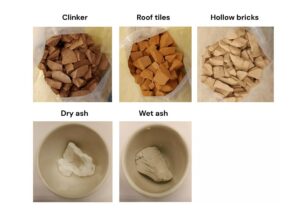
In particular, materials sourced from real industrial processes were tested, including:
- Fragments of clinker, roof tiles, and hollow bricks
- Industrial ashes, both dry and wet
- Metal slags from steel, copper, and brass, used for benchmarking
These materials underwent a series of laboratory tests to assess key characteristics such as density, heat capacity, high-temperature stability, compressive strength, and compatibility with molten salts.
Materials analysed in the eLITHE project: ceramic waste, ashes, and reference metal slags:
The collected data will be crucial for the upcoming phases of the project. The eLITHE partners will now work on:
- Studying the long-term behaviour of the materials under repeated thermal cycles
- Designing new thermal energy storage systems that can be directly integrated into ceramic manufacturing line.
The ultimate goal is to make ceramic production more flexible, efficient, and sustainable, by turning today’s waste into tomorrow’s resource.
Photo credits: Ricardvaque on iStock